Classes
A class is a blueprint for objects.
Example:
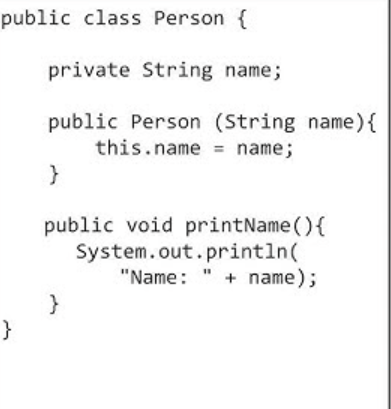
A typical Java class includes:
1. Instance Variables
These store data about the object.
Example: The person class has the instance variable “name”.
2. Methods
These define actions the object can perform.
Example: printName().
3. Constructors
Special methods used to create objects.
Example: Person p = new Person(“Bob”);
This line calls the constructor.
Key Features of Constructors:
They have the same name as the class.
They do NOT have a return type
They run once, at the moment the object is created.
You can have multiple constructors (this is called constructor overloading).
Default Constructor
If you don’t write any constructor, Java gives you one automatically:
public Person() { }
But as soon as you create your own constructor, the default one disappears unless you write it yourself.
Access Types:
public:
Accessible from anywhere in your program.
private:
Accessible only inside the same class.
protected:
Accessible in the same class and subclasses.